





The Architect of Deception and Detection: Advanced Technical Mastery in Among Us
Among Us has transcended its origins as a simple party game to become a complex psychological battlefield defined by information asymmetry, social engineering, and mechanical optimization. To excel in high-level lobbies, players must move beyond the basic "who was where" and begin to understand the game as a series of data points, cooldown timers, and vision cones. Whether you are a Crewmate attempting to build a foolproof logic chain or an Impostor orchestrating a multi-layered frame job, success depends on your ability to manipulate the "Game State" in real-time. This guide provides a deep-tier technical dive into the strategies required to dominate the Skeld, Polus, and beyond, focusing on the mechanical nuances that separate the casual player from the master manipulator.
The beauty of Among Us lies in its hidden depth; it is a sandbox where human psychology meets rigorous game logic. Every task you complete, every vent you traverse, and every sabotaged light switch is a move in a high-stakes chess match. In the following chapters, we will explore the progression of mastery, moving from the initial "Pathing" efficiency to the complex "Double-Kill" timing and the final-round social deduction that defines the peak of the Among Us experience.
1. The Geometry of Innocence: Optimizing Crewmate Pathing and Task Efficiency
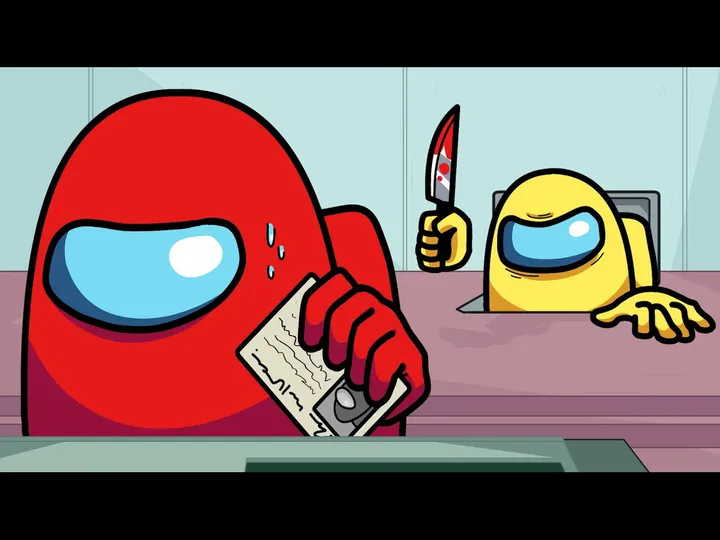
Mastering the Crewmate role begins with "Pathing Optimization." A common mistake is wandering aimlessly; instead, you must treat your task list as a tactical route. By grouping tasks by proximity—such as finishing Electrical, Storage, and Admin in a single loop on The Skeld—you minimize the time spent in high-risk corridors. Efficient pathing also allows you to "Vouch" for others; if you see the same player in three different rooms following a logical path, the probability of them being an Impostor drops significantly.
+1
Furthermore, you must understand "Task Visuals" and "Task Bars." If visual tasks are enabled, saving your Medbay Scan or Trash Clear for a crowd is a non-negotiable insurance policy. However, in "Pro" lobbies where visuals are off, you must monitor the "Common Task" logic. If the game assigns "Fix Wiring," every Crewmate has it. If you see someone standing at a task they shouldn't have, or if they "finish" a long task like "Download Data" in two seconds, you have identified a mechanical failure in their deception.
Key Task Metrics
- Short Tasks: 1–3 seconds (e.g., ID Code, Gas Can).
- Long Tasks: 5–10 seconds or multi-part (e.g., Download, Start Reactor).
- Common Tasks: Everyone has them or no one does (e.g., Swipe Card, Keys).
2. Advanced Surveillance: Mastering Admin, Cameras, and Vitals
The surveillance systems in Among Us are the most powerful tools for detection if you understand their "Refresh Rates" and "Logic Gaps." On the Admin Map, players are represented as yellow icons. A master Crewmate doesn't just look for people; they look for "Venting Signatures." If an icon disappears from Navigation and instantly appears in Weapons without crossing the hallway, that is a confirmed vent. Similarly, if two icons overlap in a room and one disappears, a kill has likely occurred.
Cameras and Vitals offer different data sets. Cameras provide "Visual Confirmation" but have blind spots and a "Blink" indicator (the red light) that tells the Impostor they are being watched. Vitals, exclusive to Polus and Airship, track heartbeats. By monitoring Vitals, you can identify the exact moment a death occurs. If you report a body the second the heart stops, the Impostor has had no time to flee the crime scene, effectively trapping them in the vicinity.
Surveillance Priorities
- Admin: Best for tracking movement through vents and identifying "faked" tasks.
- Cameras: Best for catching kills in hallways or identifying who left a room last.
- Vitals: Best for narrowing down the kill window and confirming "self-reports."
3. The Impostor’s Blueprint: Sabotage Cascading and Kill Windows
The Impostor’s primary weapon is not the knife, but the "Sabotage Menu." High-level Impostors use "Sabotage Cascading" to control the movement of the Crew. By sabotaging Lights, you reduce Crewmate vision to a tiny radius, allowing for "Stack Kills"—killing someone in a group where the blame is impossible to assign. However, the true master uses "Movement Sabotages" like Reactor or Oxygen to pull the Crew away from a fresh body, buying time for the kill cooldown to reset.
"Kill Window Management" is the secondary skill. You must understand the "Sight Lines" of every room. For example, killing in the corner of Electrical is safer than the center because the doorway obstructs the view of anyone passing by. A "Perfect Kill" occurs when the kill cooldown finishes just as you enter a secluded room with a lone Crewmate, followed immediately by a vent to a "Public Area" to establish an alibi.
4. The Art of the Self-Report: Psychological Risk and Reward
Self-reporting is a double-edged sword that requires "Contextual Timing." If you kill and report instantly, you appear "first on the scene," which can earn trust. However, if you do this too often, the "Self-Report Meta" will turn the lobby against you. The most effective self-report happens after a "Delay." Kill, vent to a nearby room, wait five seconds, then walk back in and report. This creates a "Time-Gap" that makes it plausible you just discovered the body.
When to Self-Report
- The "Stack" Scenario: You kill in a crowd during lights and report to blame the person closest to the body.
- The "Isolation" Scenario: You kill someone near a door you just locked; reporting prevents someone else from seeing you leave.
- The "Final Three" Scenario: Reporting your own kill in the final three allows you to lead the narrative and vote out the last Crewmate before they can speak.
5. Venting Physics: Navigating the Subterranean Network

Venting is the Impostor’s greatest mobility tool, but it is also their greatest liability due to "Animation Frames." Entering or exiting a vent has a distinct "Pop" animation that can be seen even through some walls or during the transition of a screen. To master venting, you must learn the "Vent Webs"—which vents connect to which rooms. On The Skeld, the triangle between Electrical, Medbay, and Security is the most lethal network in the game.
You must also account for "Vision Cones." If a Crewmate is standing at the edge of a room, they might not see the vent, but they will see your nameplate "shimmer" if you exit. Advanced Impostors use "Passive Venting"—staying inside the vent to let their kill cooldown tick down while remaining invisible. This allows you to "teleport" across the map and kill two people in different biomes within seconds, creating an impossible timeline for the Crew to solve.
6. The Social Engineering of the Meeting: Rhetoric and Framing
Meetings are where the game is won or lost. As a Crewmate, your goal is "Information Aggregation." Force everyone to state their location and their last task. As an Impostor, your goal is "Noise Generation." By introducing "Red Herrings"—like questioning someone’s "suspicious pathing" even if it was normal—you distract the Crew from the actual evidence. Use "Aggressive Neutrality"; don't be the first to accuse, but be the first to "agree" with a plausible theory against a Crewmate.
Meeting Strategies
- The "Third-Party" Vouch: Impostors can vouch for a "Safe" Crewmate to earn their undying loyalty, making that Crewmate defend the Impostor in the final round.
- The "Hard-Accuse": If caught, accusing a fellow Impostor (Bus-throwing) can "Clear" you for the rest of the game.
- The "Skipping" Logic: If there is no clear evidence, always push for a skip. Forcing a vote on thin evidence makes you look like an Impostor trying to get an easy kill.
7. The Final Four/Three Strategy: Closing the Game
The endgame of Among Us is a mathematical "Point of No Return." If there are four players left and one Impostor, the Impostor only needs one more kill to win. If there are three players left, the Crew must vote someone out or they lose. As an Impostor, this is the time for "Sabotage Lockdown." By sabotaging Oxygen or Reactor, you prevent the Crew from calling an Emergency Meeting, forcing them into a room where you can execute the final kill.
As a Crewmate, the final three is a test of "Cross-Referencing." You must ignore what people are saying and focus on what they did. If Player A vouched for Player B all game, and Player B is now dead, Player A is likely the Impostor who "groomed" a witness. The most technical move here is the "Camera Bait"—standing on cameras to bait the Impostor into a kill, then running to the button the moment the lights blink.
8. Role-Specific Tactics: Scientists, Engineers, and Guardian Angels
The introduction of roles has added a "Resource Management" layer to the game. Scientists can check Vitals anywhere but have a limited battery that recharges by doing tasks. Engineers can vent, which allows them to "Counter-Vent" an Impostor, catching them red-handed in the network. Shapeshifters can mimic other players, which is the ultimate tool for "Visual Framing."
+1
Role Mastery Tips
- Shapeshifter: Shift in a "Dark Corner" (like the back of Electrical) and run into a crowd. The goal is to be seen as the person you are mimicking while they are on the other side of the map.
- Guardian Angel: Protect the player who is "Hard-Cleared." Protecting a suspicious player only helps the Impostor.
- Engineer: Use vents to "Speed-Run" tasks, but always announce your Engineer status early so you aren't mistaken for an Impostor popping out of a hole.
9. Map-Specific Nuances: Polus Temples and Airship Ladders
Each map has its own "Physical Meta." Polus is defined by its "Open Space" and the "Decontamination" doors. Impostors can use these doors to trap Crewmates for a "Double Kill" that won't be found for minutes. The Airship is defined by "Verticality" and the "Ladders." Killing someone at the top of a ladder is extremely effective because the body is often obscured by the ladder’s sprite, and the exit paths are limited.
The Fungle introduces "Mushroom Clouds" that obscure vision. This is a "Natural Sabotage" that Impostors must exploit. By killing inside a mushroom cloud, you don't even need to sabotage the lights. Crewmates must counter this by "Buddy-System" pathing—staying within a short distance of each other so that if one player enters a cloud and doesn't come out, the other can immediately report.
10. The Psychological "Tell": Behavioral Analysis and Meta-Gaming
Beyond the mechanics, Among Us is a game of "Vocal and Behavioral Patterns." A player who is usually loud and suddenly becomes quiet is often an Impostor focused on their kill cooldown. A player who is "Over-Explaining" their tasks is likely faking them. High-level players also use "Pathing Tells"—an Impostor will often "Wiggle" or hesitate at a doorway as they check their sabotage menu, whereas a Crewmate moves with "Linear Intent" toward their next task.
To truly master the game, you must develop a "Memory Palace" for every round. Who was in Admin? Who passed me in the hallway? Who was standing at the Swipe Card task for too long? By cross-referencing these behavioral data points with the mechanical cooldowns of the game, you create a "Truth Matrix" that no Impostor can escape. The horizon of Among Us is limited only by your ability to perceive the lie within the logic.
Conclusion
Mastering Among Us is a continuous journey of psychological and mechanical refinement. It is a game that rewards the observant, the efficient, and the deceptive in equal measure. By understanding the geometry of pathing, the physics of venting, and the social engineering of the meeting room, you transform from a simple passenger into the architect of the game’s outcome. Whether you are a Crewmate building a logic-based trap or an Impostor weaving a web of misinformation, success lies in the details. Hallawnest—or rather, the Skeld—is a graveyard of the unobservant, but with these technical insights, you will be the one to emerge victorious. The truth is out there; your job is to either find it or hide it.